
Why is Safety up for Debate?
Writer: Humza Chaudrhi
Data Visualizations: Nicole Diaczun & Erica Kerman
Editors: Amelia Oakley & Grace McKissock

The Desensitization of a Nation
In the past several years, the United States has been a hot spot for mass shootings. The 2018 Parkland, Florida school shooting and the 2022 Uvalde, Texas elementary school shooting feel like common occurrences since the catalyzing school shooting occurred in Columbine, Colorado in 1999. The loss of lives and the injuries sustained were the result of gun violence carried out by sick individuals, the majority being young men who were bullied or ostracized by their peers. This raises urgent questions: what drives individuals to commit such heinous acts, and how can we prevent these tragedies?
While some point to mental health issues as the source of this violence, others believe that easily accessible firearms following current state laws are to blame. In reality, both play a significant role in shaping the likelihood of mass shootings but are not solely responsible for their occurrence. Mass violence does not occur for the same reason in the same way because it is not predictable. As a nation, we cannot change motive and behavior, but we can change how we regulate the weapons used to carry out violent motives and behavior. Key areas of focus include the varying gun laws across states and the disproportionate impact of gun violence on minority groups, particularly the Black community.
As a nation, we cannot change motive and behavior, but we can change how we regulate the weapons used to carry out violent motives and behavior.
Ever since guns became the standard weapon for war, law enforcement, and self-defense around the world, they also became the top choice for violent criminals. As a result, gun violence, especially in the United States of America, grew to become a leading cause of death. This is most commonly attributed to the Second Amendment to the Constitution granting all citizens “the right to bear arms.” These recent incidents of mass shootings spur the already-existing controversy over the U.S’s gun regulations, which are split between two stark opinions. The first opinion, mainly held by conservatives of the Republican party, claims that law-abiding civilians should be allowed to own guns to defend against violent criminals. On the other hand, progressive citizens of the Democratic party most commonly stand by the position that gun ownership should be strictly regulated, as they believe that stopping their acquisition can prevent gun violence. In the end, both opinions are flawed in some way, as the latter opinion doesn’t consider the illegal acquisition of guns, and the first opinion allows for unfit people to own them. Gun laws in other countries with far lower rates of mass shootings, such as Qatar and Finland (Enterprise Today) still allow guns but under strict conditions such as requiring a license, clean criminal and mental health record, domestic abuse history, etc. From this, the US should ideally take notes, as gun use is largely unregulated.
Favoring Opinions over Science
Different states in the US have legislated gun laws accordingly based on prevalent public opinion. For instance, conservative “red” states (which predominantly vote for the Republican party) allow for lenient gun ownership and acquisition laws, while progressive “blue” states (which predominantly vote for the Democratic party) have more restrictions and regulations. Buyers can legally bypass their own state laws and obtain guns from another state with more lax laws. The legal way requires the gun to be from a licensed dealer who may or may not subject the buyer to a background check. In 2023, Forbes published an article extracting data from a study published for the Journal of American Medical Association’s Surgery interrogating the relationship between the political affiliation of US states and gun violence mortality rates. It found that gun homicides were far more common in “red” states than “blue states,” due to the aforementioned differences in gun regulation. In particular, states with the highest rates of deaths by gun violence per 100,000 as of 2021 were Mississippi (33.9%, red state), Louisiana (29.1%, red), and New Mexico (27.8%, blue). On the other hand, Massachusetts (3.9%, blue), Hawaii (4.8%, blue), and New Jersey (5.2%, blue) had the lowest rates of gun violence.
Not every state with the lowest rate of gun violence sided with the Democratic party. However, this pattern greatly suggests that the overly lenient gun laws in “red” states are highly problematic. New Mexico, a “blue” state with high gun violence mortality rates is somewhat of an outlier, possibly because of illicit gun acquisition factoring in, or that their actual gun laws are not congruent with the dominant Democratic party’s general opinion on gun control in that state.
Bullets Aimed at Minority Groups
Alongside gun violence, another major social issue that plagues the United States is racism and targeted hatred towards certain demographics. This raises concern about how the present issue may play into the other. The CDC published an article on this topic, laying down the statistics by race, origin, gender, and sex of gun-related deaths for every 100,000 in 2021. The highest adjusted rate of this total is comprised of non-Hispanic black men. Hawaiian and Pacific Islanders are not specified due to insufficient data. These statistics are about gun violence in general, rather than only school shootings. This may include break-ins, gang activity, armed robberies, etc. Extending the trend, Giffords Law Center discusses the specific crisis of gun violence disproportionately common in black communities. Black boys and men make up only 6% of the total population in the USA, but 83% of their deaths are caused by guns. Black children were over 18 times that of a white child to be shot. Moreover, the rates rose by 49% from 2018 to 2021.

Homicides aren’t the only cause of gun violence, as firearm suicides in the black community have skyrocketed by 46% from 2018 to 2022. This could be a sign of untreated mental health issues among black Americans. Treatment would be instrumental to flattening the curve, but cultural stigma towards seeking therapy and accessibility may deter some from getting help. These factors make it clear that gun regulation has to work in conjunction with mental health treatment. Suicide is primarily caused by mental distress, which is best helped by psychotherapy, community support, and not having access to lethal weapons.
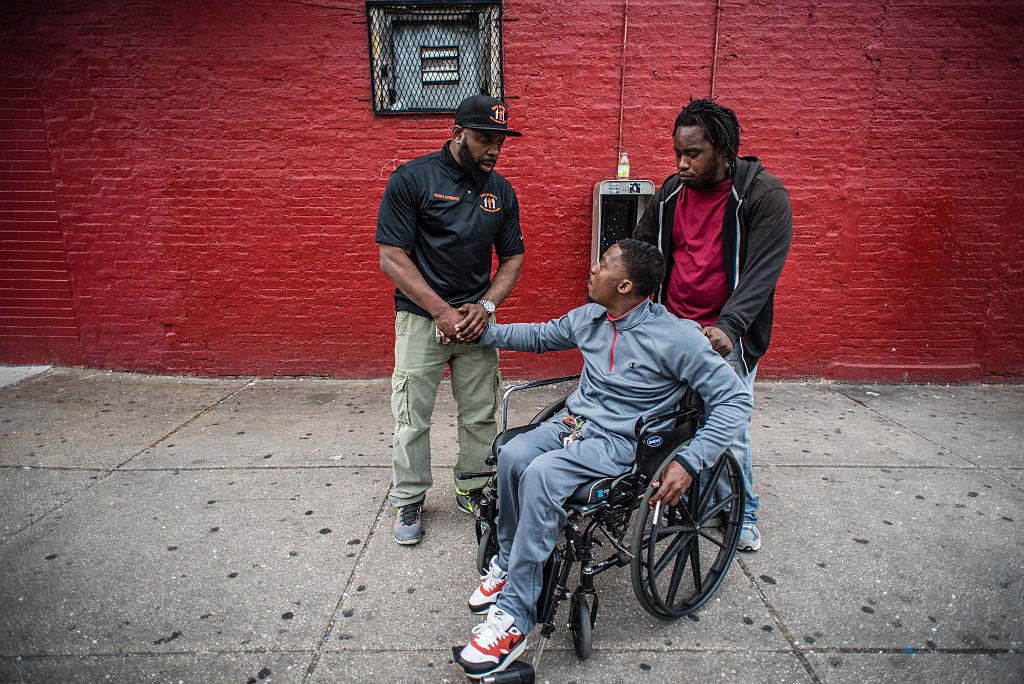
Andre Chung - Getty
Police brutality also makes up a portion of gun deaths among black Americans. Another issue which disproportionately affects this community. Police undergo mental health evaluations to determine if they are fit to properly carry out their duties, however, this evaluation does not determine if they hold any racial biases.
According to the same study by Giffords Law Center, Black Americans are shot by police three times more than white Americans.
Deaths caused by guns are out of control in the United States. We are failing the children that attend our schools, and minority groups disproportionately affected by gun deaths. Strict regulations on guns need to be implemented to prevent the wrong people from getting them. Mental health evaluations need to be stricter for anyone trying to obtain guns. Mental health also needs to be destigmatized to allow those affected to seek the help they need. What we are doing is not working, and lives are at stake. How many more people have to die before we can make a change?