
How bad were Hurricanes in Florida?
October 25, 2024
As most people reading this may know, hurricanes Helene and Milton devastated the southeastern United States, especially south and central Florida in Fall 2024, causing over a whopping $53 billion (cr. Al Jazeera) and $21-$34 billion respectively (cr. CoreLogic). They leveled thousands of buildings and homes, flooded streets and caused the deaths of hundreds of people. These natural disasters ultimately devastated the lives of thousands of southeastern Americans last month.
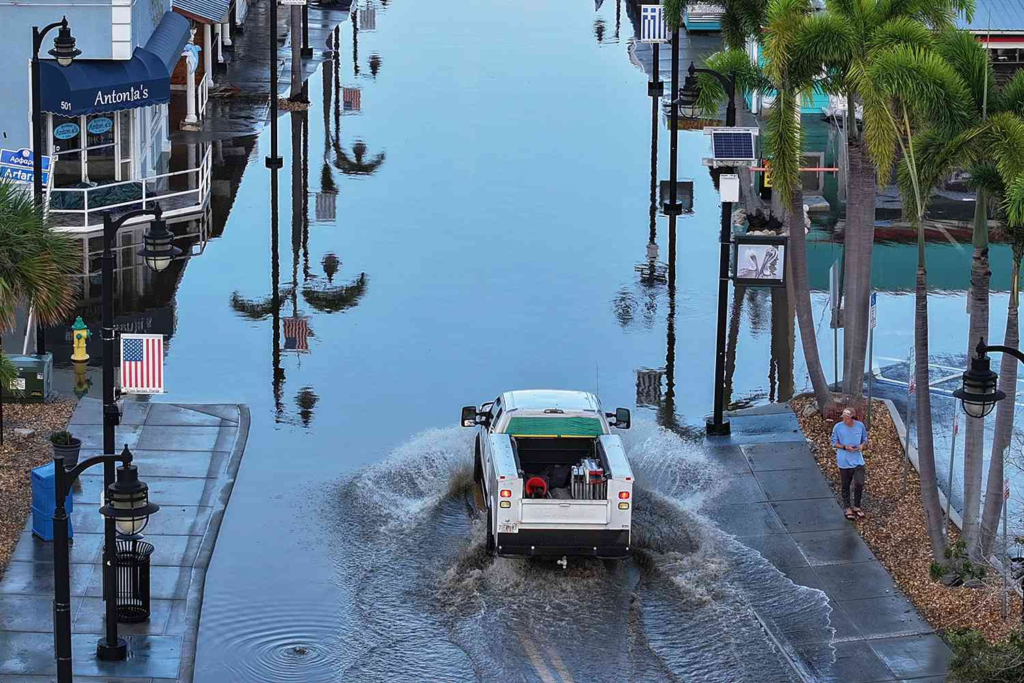
Flooded streets of Tarpon, FL after Hurricane Helene hit. Photo: Joe Raedle/Getty
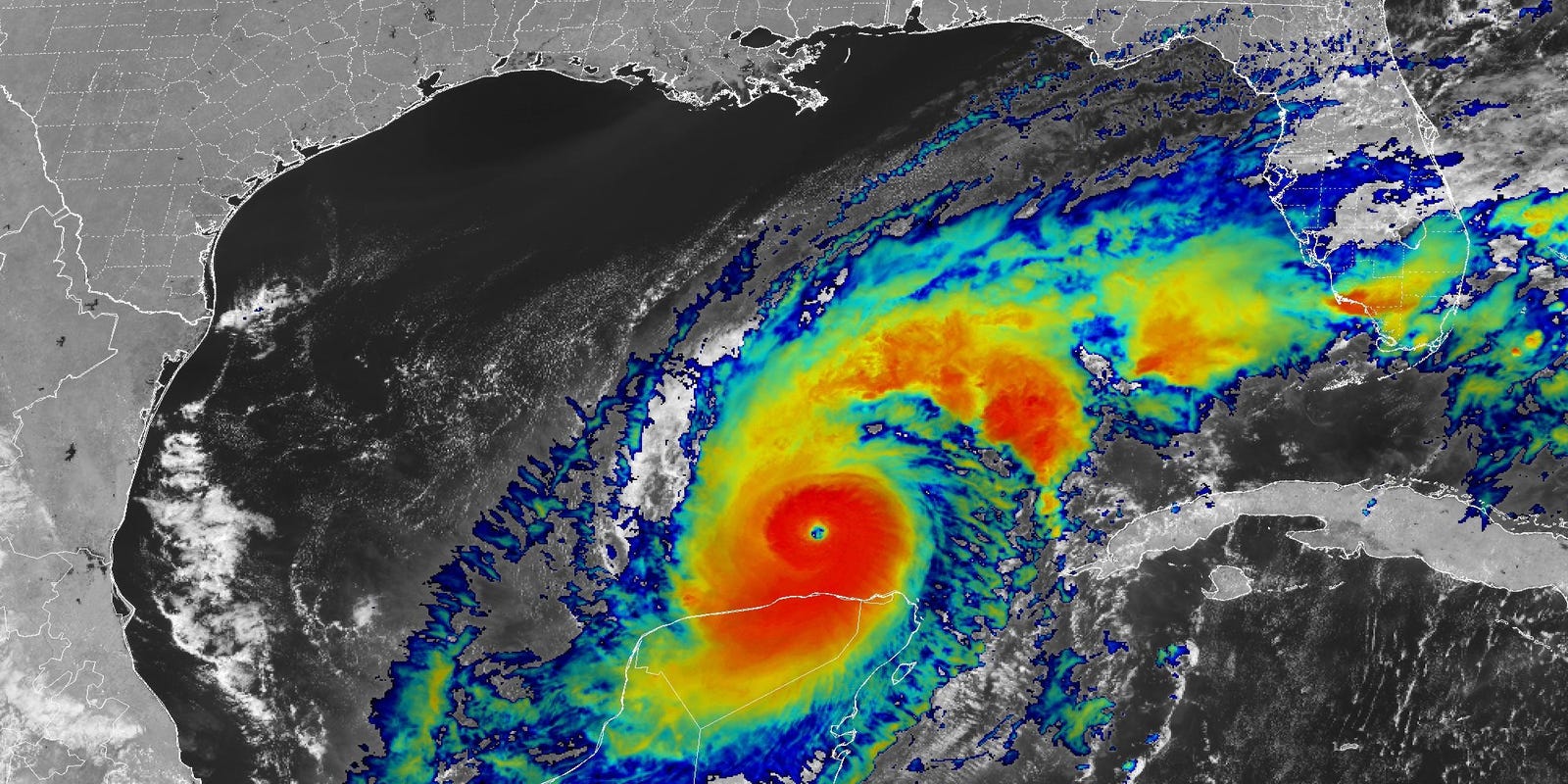
Map of Hurricane Milton, courtesy of Sarasota Harold Tribune
Hurricanes have devastated the southeastern region of the United States for decades. More recently. Hurricanes have picked up in frequency at an alarming rate. In the past few weeks, two major hurricanes, Hurricane Milton and Hurricane Helene made landfall in the southeast as category 4 and category 3 storms, respectively. A new hurricane, Nadine, is expected to make landfall within the coming days as well. Hurricane Nadine would be the 10th hurricane of the 2024 Atlantic season.
A hurricane is defined as “a tropical cyclone with winds of 74 miles (119 kilometers) per hour or greater that is usually accompanied by rain, thunder, and lightning, and that sometimes moves into temperate latitudes.” Hurricanes have caused over $1.3 trillion in damages since 1980, and have also been the most frequent natural disaster in the United States since 2000. They are especially prevalent and dangerous in Florida, which is why Florida holds the title of “the hurricane capital of the United States.”
There is one suspect, climate change. Hurricanes have greatly increased in strength over the years, and climate change can be blamed. Hurricanes form from the ocean surface as warm, moist air rises and causes winds to start spinning. The greater the temperature, the greater the energy the winds can gather. With climate change bringing increased temperatures, hurricanes are able to grow in strength as more energy is gathered from the hotter waters. Warmer temperatures also allow the atmosphere to hold more moisture, which leads to greater rainfall and greater flooding. The warmer temperatures additionally cause glaciers and ice sheets to melt, rising sea levels. These rising sea levels contribute to greater storm surges and catastrophic coastal flooding, on top of higher wind speeds, creating hurricanes capable of much greater damage.
Housing insurance is one big issue arising from increasing hurricane frequency and strength. October’s Hurricane Milton alone cost insurers from $30-$50 million in losses. Hurricane Ian in 2022 cost insurers $60 billion in insured losses. These huge numbers have left insurance companies to be more wary. Many have changed their policies including Progressive, which stated they will not renew current insurance policies. Citizens Property Insurance Corporation, a state-backed non-profit company, has had to step up as the new largest insurance provider in the state. It was supposed to be the last-resort option, however due to large companies backing out of Florida and changing their policies to make getting housing insurance harder, Citizens Property Insurance Corporation has become the only option for many. Last month, there were 1.3 policies in motion, which is three times the amount it was five years ago. However, even Citizens has exceptions: individuals can only qualify if “the lowest quote they get from a private insurer is more than 20% greater than the Citizens’ quote” and their home is valued under $700,000. Citizens cannot sustain themselves even with these exceptions due to the influx of customers, and they are one storm away from not being able to pay back the losses. Moreover, even those who have insurance are facing complications and confusion, as those with home insurance are getting their insurance claims denied if they do not also have flood insurance.
Total losses from hurricanes have topped the charts as the highest damage weather disaster since 1980. On average, each hurricane brings $22.8 billion in losses. Not only do hurricanes bring damage costs, but they bring additional costs such as medical expenses, evacuation costs, and income losses. Hurricane Michael devastated Florida’s panhandle in 2018, especially Bay county. 22,000 people lost their homes and a year after the storm, 5,000 people were still without a home. Evacuation costs have increased to a range stemming from $1,500 to $3,000. This includes gas, hotels, and so many more associated costs which have people even in mandatory evacuation zones staying in their homes to avoid these costs. People may also stay in their homes if they choose to believe climate change is not as real as scientists claim it to be, however the increasing severity of storms says otherwise. Choosing to stay has many costs as well, as homeowners have to buy hurricane shutters, flashlights, water, and canned food in preparation for potential power outages lasting days to weeks.
This all being said, it is important for homeowners to understand the risks of living in Florida. It will come with increased costs for storm preparation including hurricane shutters and evacuation costs. Most importantly comes the risk of losing your home, either due to flooding or high winds. High winds can also bring tornadoes, as seen recently with tornadoes brought upon by hurricane Milton. These natural disasters are picking up in power and it is important to be aware of the risks when assessing future moves or current housing situations
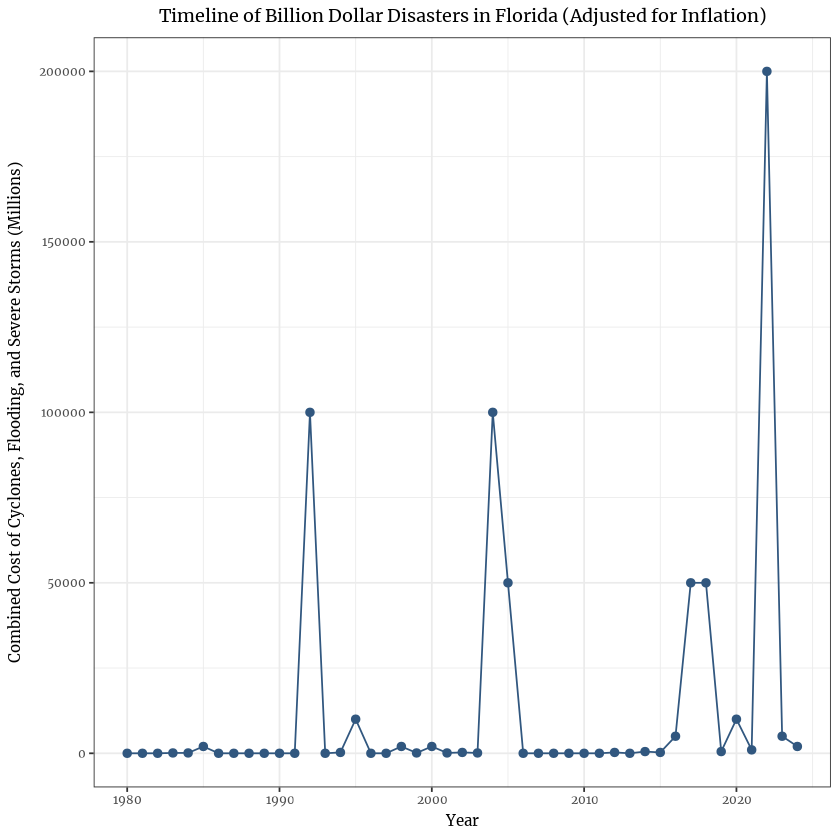
Figure 1. The all time high (inflation-adjusted) tropical storm damage cost was in 2021, totaling at a shocking $200,000 million.
Every August through October, the southeastern United States prepares for hurricane season by raiding grocery stores, buying generators, and boarding windows. This year, these preparations would not have been enough to survive. Nowadays, fleeing, evacuating, and moving out of storm zones are the only guaranteed survival methods.
Hurricanes, the most destructive type of tropical cyclones, have not been an unknown danger to the Gulf Coast. The coastal waters of Florida are the most susceptible to floods, high winds, and power outages related to tropical cyclones. This has all been a known fact. The most infamous hurricane for displacing and destroying the Gulf Coast region was Hurricane Katrina in 2005. Effects were felt all along the East Coast towards the New York area. Isn’t it a little concerning that the multiple hurricanes of 2024 have been comparable to the rare and destructive occurrence of Katrina? There must be an underlying issue at hand.
Climate change is an impending crisis that many people shrug off because it’s “not real”, which is scientifically untrue. Man-made activities are the main cause of long-term changes in weather patterns. The sea level has risen about eight inches from the 19th century, the highest global surface air temperature has increased nearly three degrees from the mid-20th century, and ocean temperatures are rising. These seemingly insignificant changes have led to mass destruction with the formation of hurricanes. Hurricanes thrive off of warm tropical waters, gaining strength and intensity rapidly. Climate change’s warm oceans and humid air is a hurricane’s specialty, but a recipe for disaster for Americans.
Hurricane Helene and Hurricane Milton were two of the most intensified tropical cyclones of 2024. For instance, Hurricane Milton’s wind speed surpassed meteorologists’ standard measures of hurricane winds. Not to mention, the southeastern United States was just battered by Hurricane Helene shortly before Milton’s appearance. Soaring death rates were inevitable. The abnormally warm waters in the Gulf of Mexico cause this rapid intensification, fueling the movement of a tropical cyclone through the southeastern United States. Faster and stronger storm formations give communities less time to prepare or flee in a sudden life-or-death situation.
Climate change does not necessarily increase the frequency of tropical cyclones. However, each hurricane season the storms that are projected to be “small” are quickly aligning with the characteristics of massive storms. Communities that are unprepared for these life-threatening storm surges are left victim to mass destruction. A direct correlation to climate change is the death toll of these massive storms. Being unprepared and unaware of a hurricane’s strength will lead to injury and death.
Northern Florida communities were left in a dire situation after Helene and Milton. Inland communities were subjected to the landslides, flooding, and harsh winds that the coastal communities are usually prepared for. Tornadoes have been forming on the outer bands of cyclones more frequently, an issue that generally doesn’t persist outside of the “Tornado Valley” region. The power of the storm surge has also been unfathomable as of recently. Most of the recent hurricane-related deaths are from drowning, as homes and cars are taken adrift in fast and deep waters.
Hurricane-related deaths increase even after a hurricane has left a community in shambles. The clean-up and recovery process puts first responders and the stranded in a life-threatening situation. Strong winds leave live wires in the flood, where electrocution is imminent if one’s not careful. These recently “supercharged” storms have drawn out the excessive clean-up process, posing more threats to the lives of a community. Rapidly intensified cyclones leave southeast states in ruins long after a storm has done its job.
This leaves an obvious question unanswered, “Why don’t communities just evacuate the storm-infected areas?” Many factors come into play in this situation, such as expenses, locations, and personal items. However, ignorance of climate change can constitute one’s hesitation to flee. In a conservative South, the conversation about climate change is minimal. Many individuals ignore the advice of proficient meteorologists, riding out monstrous storms that project low survival rates in certain areas.
Ignorance factors into the increasing death tolls of hurricanes rummaging through the south. Although residing in Florida means generally warmer weather year-round, being unaware of the risks of inhabiting such a targeted area is dangerous. Newcomers will be less prepared than the Florida veterans who truly understand what hurricane season entails.
The newfound factors that need to be considered each hurricane season pose a substantial risk to individuals’ lives. As climate change persists, hurricane-related issues will only increase in severity and scope.
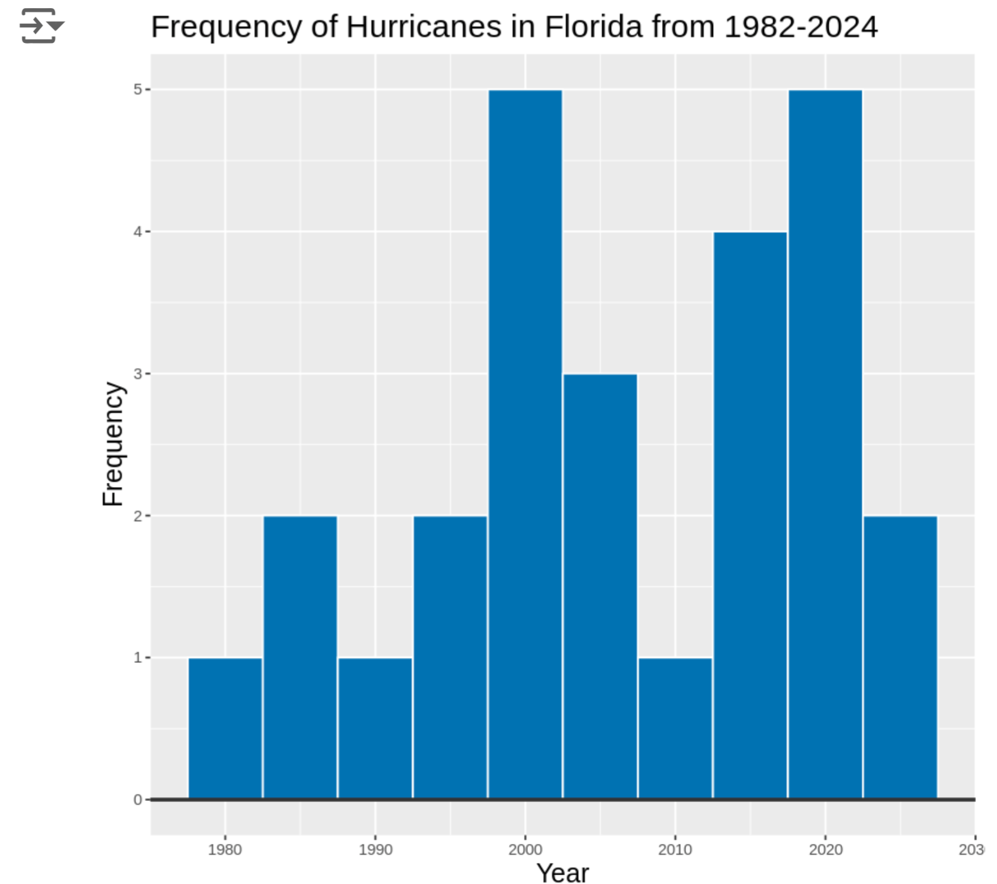
Figure 2. Hurricanes hit Florida the most frequently around the years 2005 and 2022, and the least frequently around 1980, 1990, and 2010.
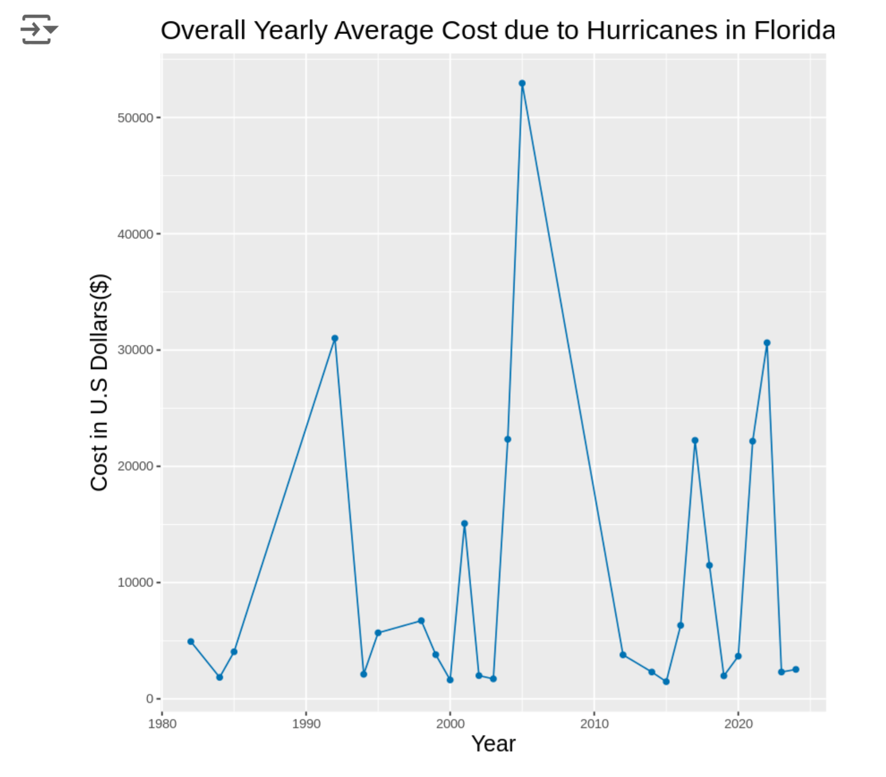
Figure 3. The damage cost spiked in 1990, the highest yearly cost until 2005, whose cost totaled to over $50,000 US dollars. The lowest cost was in the year 2000, totaling to around $2,500.
Data charts by Grace McKissock and Amelia Oakley
Articles written by Nicole Diaczun and Erica Kerman
Data visualization powered by Google Colab using R language.
Edited by Humza Chaudhri
Works Cited:
- “Hurricane.” Merriam-Webster.com Dictionary, Merriam-Webster, Inc., www.merriam-webster.com/dictionary/hurricane. Accessed 27 Oct. 2024.
- Bowers, John. “Hurricane Milton, Helene Insurance Nightmares Torment Florida Residents.” NBC News, 12 Oct. 2024, www.nbcnews.com/business/consumer/hurricane-milton-helene-insurance-nightmares-torment-florida-residents-rcna175088. Accessed 27 Oct. 2024.
- Rojas, J. “Citizens Insurance Faces Pressure After Hurricane Milton.” CNN, 11 Oct. 2024, www.cnn.com/2024/10/11/business/citizens-insurance-hurricane-milton/index.html. Accessed 27 Oct. 2024.
- “Hurricane Costs.” National Oceanic and Atmospheric Administration, NOAA, coast.noaa.gov/states/fast-facts/hurricane-costs.html. Accessed 27 Oct. 2024.
- Gonzalez, Enrique, et al. “Hurricane Michael: The Challenge of Financial Recovery from Disasters.” Wharton School, University of Pennsylvania, July 2023, esg.wharton.upenn.edu/wp-content/uploads/2023/07/Hurricane-Michael-The-Challenge-of-Financial-Recovery-from-Disasters.pdf. Accessed 27 Oct. 2024.
- Li, Jane. “Hurricane Milton Could Cause $50 Billion in Losses, Fitch Says.” Business Insider, 11 Oct. 2024, www.businessinsider.com/hurricane-milton-insurance-fitch-50-billion-losses-2024-10. Accessed 27 Oct. 2024.
- McCarthy, Niall. “Are Major Natural Disasters Increasing?” Statista, 15 Jan. 2024, www.statista.com/study/95060/natural-disasters-overview/. Accessed 27 Oct. 2024.
- “How Much Damage Have Natural Disasters Been Causing?” World Economic Forum, 20 Sept. 2024, www.weforum.org/agenda/2024/09/natural-disasters-damage-statistics/. Accessed 27 Oct. 2024.
- Kauffman, Katie. “Milton Is the Hurricane That Scientists Were Dreading.” The Atlantic, 12 Oct. 2024, www.theatlantic.com/science/archive/2024/10/hurricane-milton-scientists-worry/673282/. Accessed 27 Oct. 2024.
- “Natural Disasters Stats.” Specialty Fuel Services, 2024, www.specialtyfuels.com/natural-disaster-statistics. Accessed 27 Oct. 2024.
- Baird, Michael. “Another Major Hurricane Is Approaching Florida, One of the Most Rapidly Intensifying on Record.” The Verge, 10 Oct. 2024, www.theverge.com/2024/10/10/hurricane-florida-approaching. Accessed 27 Oct. 2024.
- “Climate Change Is Affecting Hurricanes.” National Oceanic and Atmospheric Administration, 2024, www.noaa.gov/climate-change/hurricanes. Accessed 27 Oct. 2024.
- Wooten, David. “Tropical Storm Helene Death Toll, Missing People in Western NC.” Raleigh News & Observer, 13 Oct. 2024, www.newsobserver.com/news/weather-news/article274221265.html. Accessed 27 Oct. 2024.