
Love Scams Gone Viral
Since bots are not real accounts, they can be made, run, and send messages automatically. Because they are so easy to make, they make up a large portion of all the accounts in these dating sites like Tinder, Hinge, and Bumble. Why are people doing this? Besides deliberately stealing the money of users, they are also used for human trafficking which we will reference later on. Using bots gives them much more accessibility and expands their influence to all users (Federal Trade Commission).
So this gives rise to another question. How do people fall for this and does this actually work for the scammers? Sadly, the companies of the apps and the users lose hundreds of millions every year. Most people who are targeted are older individuals but it isn’t uncommon for younger people to fall victim as well. This also gives these dating sites a bad image as they fail to regulate the amount of bot and scam accounts. Overall, this is bringing significant harm to both the company and the users within these apps.
Pig Butchering: The Dark Side of Romance Scams
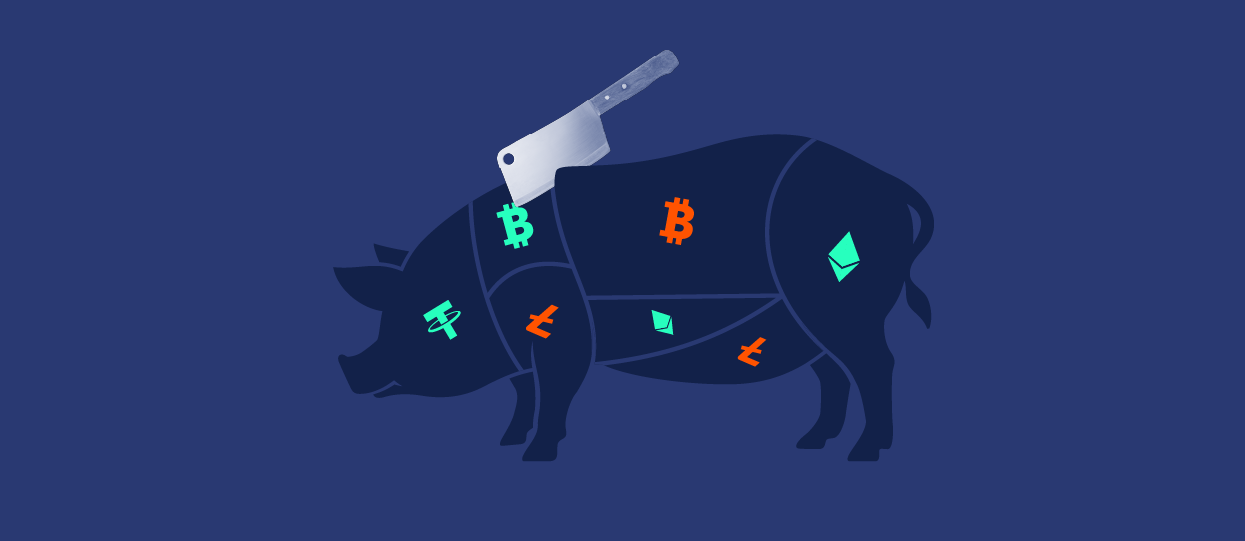
What is “Pig Butchering” and what does pork have to do with dating scams? Well, pig butchering in this case has nothing to do with the meat industry. “Pig Butchering” is one of the darker effects of romance scams that involves illegal human trafficking and labor. This usually occurs in Southern Asian countries where people are tricked to perpetuate schemes against their will. The original term of “Pig Butchering”, comes from the act of fattening up a pig before essentially killing them for meat. This is a dark but accurate metaphor for what the scammers are doing (ProPublica).
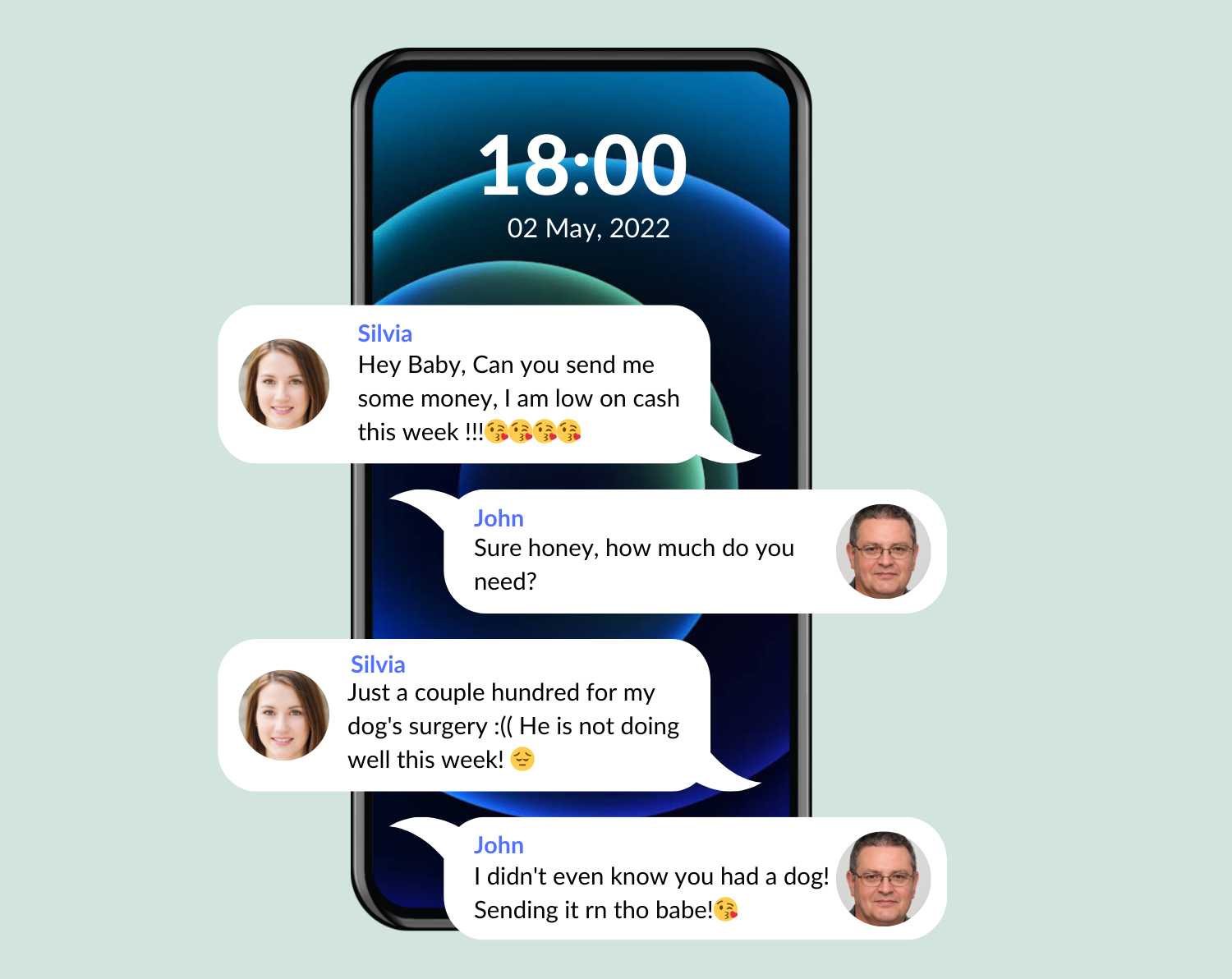
Pig Butchering scammers use online dating sites like Tinder to target their victims. People who are using online dating apps are usually looking for a romantic partner. This makes them susceptible to trusting and fall victim to manipulation. After building trust, this leads to the butchering part of this scheme.
According to the Federal Trade Commission, some of their favorite lines to manipulate you into sending them money is ‘I, or someone close to me is sick, hurt, or in jail” which they use 24% of the time. Another way they use is by mentioning ways that they can teach them how to invest which occurs 18% of the time. In the same number of occurrences, they might mention that they are in the military or need help with an important delivery. Overall, these are some lines that they use regularly that can help you identify them as scammers.
Love Hurts…and Sometimes It Steals Your Savings
Falling in love is supposed to be a roller coaster ride filled with late-night conversations kicking up your feet in bed, screaming in your pillow out of frustration, and at times making you feel like life is worth living as it restores your faith in humanity. However, that isn’t the only roller coaster when it comes to how love can impact your life. Your bank account is also vulnerable to go up and down if you aren’t very careful.
Imagine this: you’re scrolling through your dating app, and there they are—your dream person. Your Romeo to your Juliet. They’re charming, bright, attentive, articulate, and just so happen to have a lucrative “investment opportunity” to pull you in. Spoiler alert: the only return on investment in this scheme is a heartbreak and financial devastation.
This is the cruel irony of pig butchering scams. These fraudsters don’t just con people out of money; they pull at your heartstrings first. They turn affection into ammunition, trust into a trap, and promises of forever into financial ruin. Consider the trauma and emotional scars as the interest you pay on your ‘financial investment’. With that being said, let’s dive into the raw, vicious aftermath for victims as we describe their pain through numbers and datasets.
According to this article from the Federal Trade Commission in 2023, nearly 70,000 people reported a romance scam with losses hitting a staggering $1.3 billion back in 2022. The median reported loss was $4,400, and it looked as if this was another area in which COVID-19 impacted our lives even after the end of the pandemic as these trends follow the spike in online dating app scams seen from 2020 and 2021. In that single year of 2022, cryptocurrency was responsible for 34% of the total reported financial losses whilst only accounting for 19% of the total number of reports. On the other hand, gift cards accounted for 24% of the total number of reports but only liable for 7% of the actual financial losses. This shows that if your partner ever brings up crypto or gift cards, close out the app IMMEDIATELY. Ok, on a more serious analysis, this proves that cryptocurrencies’ varying values is an extremely risky ‘investment opportunity’ and will hit you the hardest if you fall for it. You’re a lot more likely to get trapped using gift cards but don’t worry, even if you do fall for it, you shouldn’t be losing too much money. One last thing to note from this article is that just because you’re young and know how to navigate the internet better than the millennials and boomers, it doesn’t mean you’re not as susceptible to these scams. If anything, reports show that younger people are actually more likely to fall victim to these schemes; specifically, sextortion. Scammers who convince you to share explicit photos will in turn threaten to share them online if you don’t pay up. People aged 18-29 were over six times as likely to report sextortion than people 30 and over. So, the age-old saying of “be careful of what you put on the internet or else you’ll fall into a sextortion scheme on an online dating app” still stands to this day.
In this graph created with data from the Internet Crime Complaint Center (Federal Bureau of Investigation), we look specifically at confidence/romance fraud under all types of fraud in the U.S.. It is evident that COVID-19 caused a massive surge in the sheer amount of money these con artists robbed people of. 2019’s $475 million already seems like an insurmountable amount, but it pales in comparison to 2021 when this number doubles to $956 million. However, the one silver lining would be that 2021 and the COVID-19 pandemic may just be an anomaly and will not continue the trend of increasing amounts of money lost with more reports of romance fraud itself. In 2022 and 2023, it looks as if we are slowly trending back to the pre-pandemic number of fraud cases, especially highlighted in the second part of the graph that shows the number of romance fraud cases.
Ok, online dating Scams are extremely dangerous, we get that. How’s it being dealt with by law enforcement?
Well, there are laws that will help you if you ever do get caught up in an online dating scam. However, when it comes to these kinds of cases, the law is playing a game of catch-up with scammers who always seem one step ahead. Similar to online privacy and AI issues, technological innovation has simply outpaced our bureaucracy and there are many hurdles that law enforcement face when presented with this matter (maybe it has to do with the demographics of our policymakers; ok I’ll stop). The biggest hurdle is the fact that scammers often operate from jurisdictions where enforcement is lax and cooperation is limited at best. The anonymity provided by the internet and VPNs makes tracing these financial transactions a nightmare. Combine this with the number of reports and devastating financial losses, it’s like catching fish with your bare hands.
The Wire Fraud Act: The Scam Slayer (Sort Of?)
However, again, there is a silver lining. The Wire Fraud Act is the most frequently used policy in the legal fight against online dating scams. Although it was enacted in 1952 (again highlighting how potentially outdated our laws regarding technology could be), instead of targeting fraud transmitted via wire, radio or television, it is now the go-to law for prosecuting criminals operating through emails, texts and dating apps in this digital age. What makes this Act so notable is its broad wording. It doesn’t matter if the scammer is selling crypto or wants a $5 donation to their cash app. The only criteria they need to meet is if they used electronic communication to scam someone. And if they did, they’re in violation and will be personally escorted to their hefty penalties including fines and potential prison time, which will of course escalate the larger the case is and more parties involved. Sorry to end on a downwards note again, but like all things related to law, there’s an easy way for scammers to avoid this: operate outside the jurisdiction of U.S. law enforcement, which in simpler terms means scam Americans from a country with little incentive to cooperate with U.S. law enforcement. That’s why we’re here though, to prevent you from going down this trap in the first place so you can avoid the whole headache.
Wrapping It Up: Swipe Smart, Guard Up.
Online dating is supposed to be a modern fairytale; full of quirky messages, cringey interactions, and a place where underneath all the rubbish, you might find the hidden gem of true love. But as we’ve uncovered, the digital landscape can also hide some serious dangers within the bushes and the woods. Just like the werewolf licking his lips watching Little Red Riding Hood, there are many extroverted bots looking to steal your data and privacy, and other pig butchering scammers looking to fatten you up for financial slaughter. The stakes are high, but here’s the good news: awareness is your strongest armor, and you ain’t no Little Red Riding Hood. If you ever encounter a potential scammer on an online dating site, take a step back. Think to yourself “My, how perfect of a personality you have”, “My, how anonymous and vague you sound”, “My, what lucrative investment opportunity you have”, and critically analyze your partner at times.
By understanding the playbook and narrative scammers use—love bombing, emotional manipulation, too-good-to-be-true investment pitches—you can avoid this whole hellhole. Spotting red flags and trusting your gut can save you thousands of dollars but most importantly a heartbreak. While the legal system and dating platforms are playing catch-up to find these criminals, every new person aware of these scams is a win for all internet users. So whether you’re swiping for “the one” or just looking to chat, keep your eyes wide open and your wallet tightly shut. Love might be blind, but you don’t have to be.
Peace out,