
oughhhhhh
Silly fellow
Hello

eureka!

This episode was researched, written, recorded, edited, and uploaded by me, Ryan Desnick, so thanks for tuning in.
]]>
In recent years, Binghamton University (BU) has made large strides in sustainability through energy-saving projects that align with Leadership in Energy and Environmental Design (LEED) and New York State Executive Order 88 standards, even being named one of Princeton Review’s top 50 green schools in 2023. Binghamton’s commitment to sustainability is further bolstered by its dedication to clean energy and sustainability research. To continue being a sustainability leader amongst universities, Binghamton must continue its progress by changing current practices that do not match its commitment to sustainability in other areas.
Following New York State’s executive orders in 2001, BU has incorporated sustainability and energy efficiency into the construction of building designs mainly through lighting and temperature controls. The university monitors energy use and building management with a centralized Energy Management System (EMS). According to the BU’s Office of Sustainability’s website, this system has been in use since 1984 and has grown in sophistication and size. Over 183,000 data points are being observed with the EMS, allowing individuals to control and program each building’s HVAC and lighting systems. The system is used to conserve energy when a building is unoccupied and maintains space temperature, humidity, and ventilation rates that meet sustainability needs. The New York State’s Public Service Commission (PSC) requires BU to reduce energy during load curtailment sessions, such as long breaks, excluding critical research spaces that experience slightly warmer temperatures. Solar panels are also an additional approach that the university takes towards meeting conservation demands. BU’s campus has multiple installations of solar panels across various residential and academic buildings, including the Susquehanna Apartments Community, the Information Technology Complex, and above the pay-by-space meter systems.
In 2013, the New York State Energy Research and Development Authority gave the university a High-Performance Energy Efficiency award for the construction of the Engineering and Science Building. The structure uses geothermal heating and cooling, natural lighting, technology for heat recovery and humidity control, and passive solar energy with a 127-kilowatt installation on the facility’s roof. Its two-story photovoltaic wall contributes to research opportunities on solar technology, which is developed in both the Center for Autonomous Solar Power and the Center for Advanced Microeconomics Manufacturing. The Engineering and Science building was also rated LEED Platinum. In addition to the Engineering and Science building, many other LEED-certified structures on campus have earned sustainability achievements, mainly newer construction and major renovation projects at BU. These buildings have been constructed to LEED silver or higher ranking. The buildings that have earned LEED Silver include the University Downtown Center, Newing College’s Bingham Hall, and the Chenango Collegiate Center. Newing College’s Broome, Endicott, and Delaware halls, Dickinson Community’s Johnson, O’Connor, Rafuse, and Digman halls, as well as the Innovative Technologies Complex’s Center of Excellence are all rated LEED Gold.
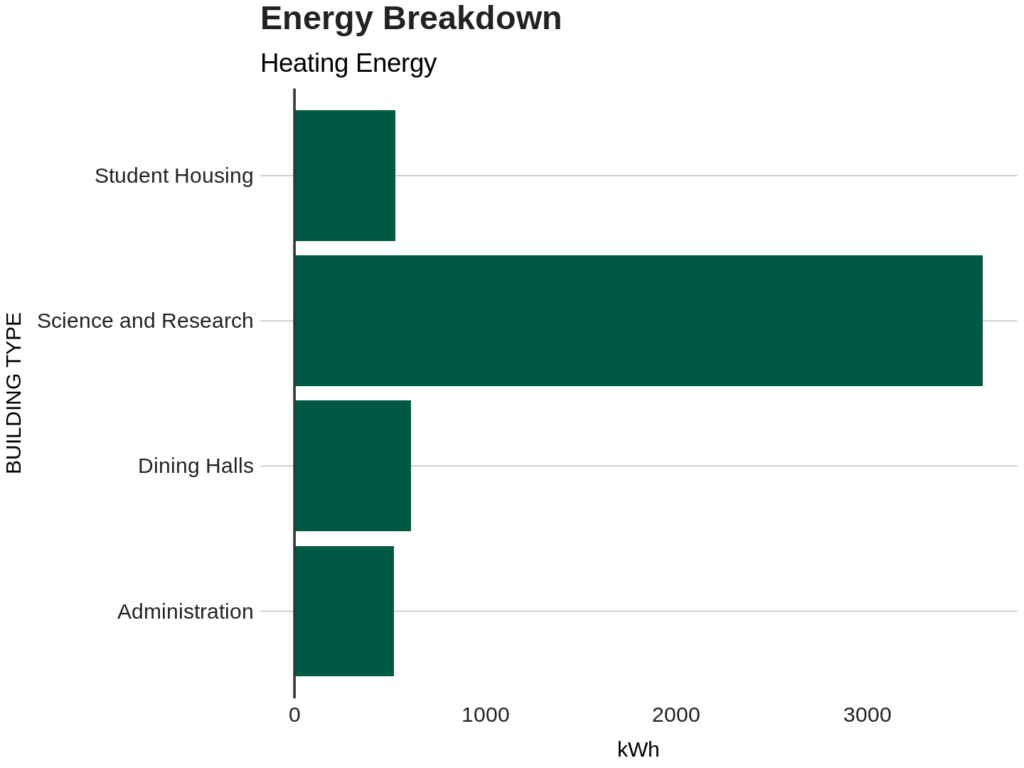
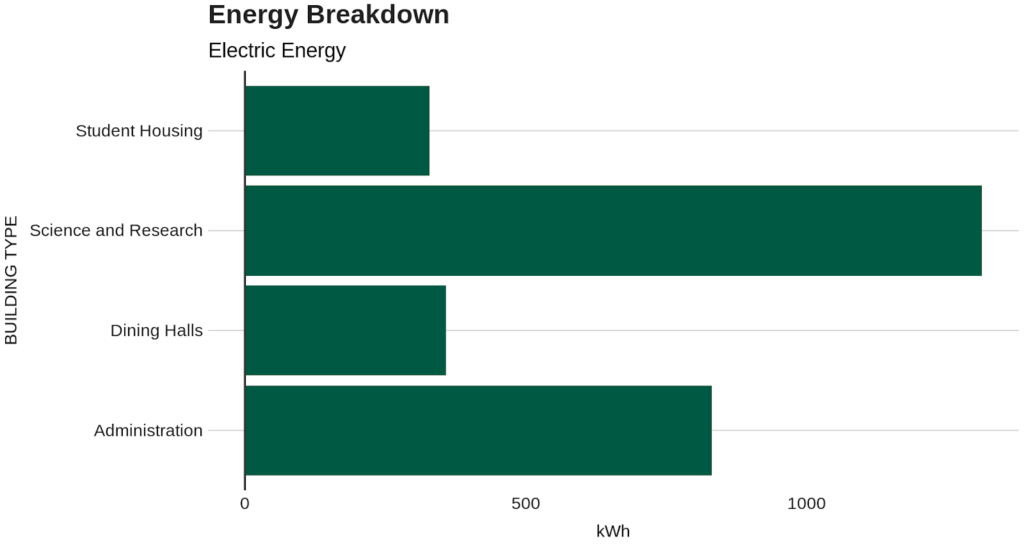
Between 2001 and 2002, the university conducted a campus-wide energy audit which introduced numerous energy-saving opportunities. These projects were implemented in 2003 and used mostly in-house resources. The energy efficiency programs continued until 2006 with BU’s senior administration finding funds that were allocated towards future projects. According to a presentation by Sandy DeJohn, the assistant director for utilities and mechanical systems, over $10 million has been invested with over $15 million in savings. When Executive Order 88 was issued by Governor Cuomo, BU set a goal to focus on reducing Source Energy Use Intensity (EUI) which is the amount of raw fuel used to generate electricity or heat consumed by end users. The current strategy for heating includes the installation of high-efficiency gas boilers to decentralize portions of the heating load. The university plans on gradually transitioning from fossil fuel-based heating to high efficiency electric-based heating.
Binghamton University has also invested heavily in sustainability research in hopes of becoming a global leader in sustainability. Notably, the Transdisciplinary Area of Excellence (TAE) in Smart Energy supports extensive research in solar and thermoelectric energy, as well as improvements in energy efficiency, storage, and management. The TAE also works on projects going beyond energy research, looking into supporting sustainable communities from many perspectives with the overall goal of educating the next generation in the practices and skills needed to foster sustainable communities. For example, the TAE sponsors projects focusing on ecosystem and forest sustainability as well as projects focusing on the sustainability of local communities through a social and economic lens. The TAE has proposed using $110 million worth of grants to build a battery technology and manufacturing center in Endicott, NY, supporting sustainable practices and economic growth in the area. Binghamton University was also awarded a Seed Grant for the 2023-2024 school year which will “stimulate the advancement of new ideas that can build Binghamton University’s expertise toward a national reputation in the broad area of sustainable communities” through research funding. The University has also dedicated a facility to research of the lithium-ion battery, a form sustainable energy used in modern electronics, developed in part through research by BU Professor Stanley Whittingham. These efforts lead to BU being ranked #1 Top Performer in Sustainability Research by the Association for the Advancement of Sustainability in Higher Education (AASHE) in 2020. Research efforts sponsored by the University not only support a cleaner campus, but also sustainable changes in a larger, global scientific community.
It is the responsibility of higher education institutions to promote and invest in sustainable practices not only for accolades and prestige but also to create a better future for generations beyond.
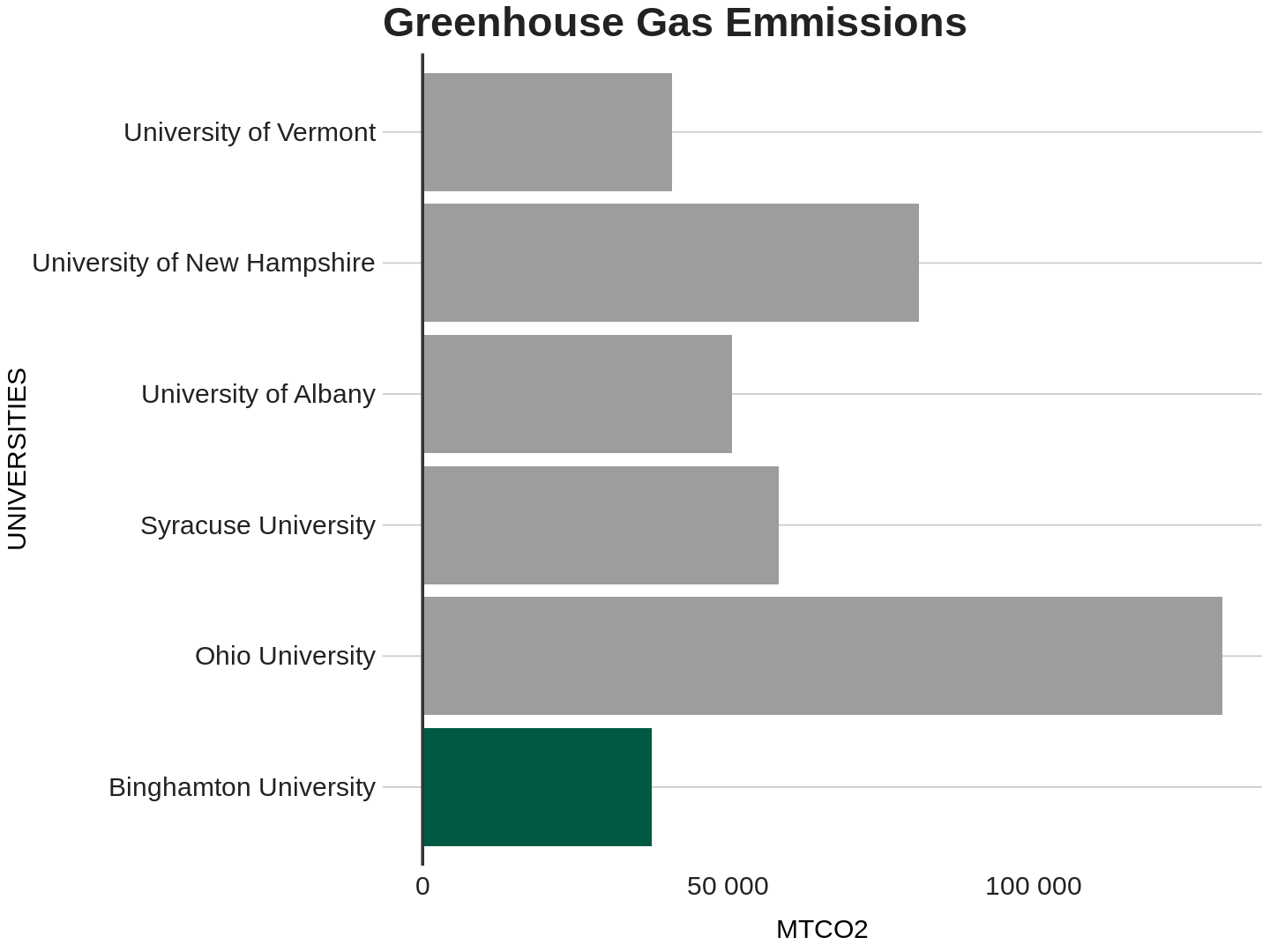
Beyond research and building construction, the University’s sustainability practices can best be analyzed by its greenhouse gas (GHG) emissions and energy use efficiency. GHG emissions are summarized in three scopes: scope 1 is defined by direct emissions from sources owned by an entity, scope 2 includes indirect emissions such as from purchased heat, electricity, and cooling, and scope 3 includes all other emissions. In 2023, Binghamton University had a total of 37,560 metric tons of CO2 emissions- 19,865.58 metric tons from scope 1, 7,624.40 from scope 2, and 10,071 from scope 3. For reference, the average carbon emissions of households in major cities in the United States range from about 17 metric tons to 29 metric tons per year. The average carbon emissions of households across the United States is about 7 metric tons per year. Assuming a small city has somewhere around 5000 households, a small city would produce around 35000 metric tons of CO2. Considering these values, Binghamton University produces the same amount of carbon as about 5,366 US households, about the size of a small city. These values are on par with what is expected considering the student population as well as the number of buildings and facilities making up the university.
In 2010, the average carbon emissions for institutions of higher education in the US was 52,434 metric tons. Furthermore, between 2013 and 2020, many major institutions, including Cornell University and the University of California, Los Angeles (UCLA), saw increases in carbon emissions of upwards of 24,000 metric tons. So, even though the average carbon emissions of higher education institutions have increased since 2010, Binghamton University remains below the average of the past. In March 2023, Binghamton University earned a gold rating from the Sustainability Tracking, Assessment & Rating System (STARS) which lasts until April 2026. STARS is “a transparent, self-reporting framework for colleges and universities to measure their sustainability performance.” This rating encompasses several categories, the broadest of which include academics, engagement, planning and administration, as well as innovation and leadership. Within these categories, universities also report research efforts, water and energy use, waste production, food and dining, purchasing and investment, and transportation. Out of 360 schools with reports, 175 earned gold rankings (49%). In comparison, Binghamton University ranks equal to or better than many other mid-sized universities. The University of Vermont and the University at Albany (UAlbany) are examples of other mid-size universities with gold rankings. The University of Vermont had an annual total of 40,786 metric tons of CO2 in 2023 while University at Albany had a total of 50,579 metric tons of CO2 emissions. Schools with similar populations that earned lower rankings include Ohio University (in 2021, 130,845 metric tons of CO2 emitted) and Syracuse University (in 2022, 58,310 metric tons of CO2 emitted) which earned silver rankings. Further, the University of New Hampshire, another mid-size university, emitted a total of 81,197 metric tons of CO2 and earned a platinum rating, demonstrating how the rankings depend on more than emissions alone.
Based on the above values, Binghamton University has relatively low carbon emissions, meaning an improved sustainability ranking must come from other areas. There are a few notable areas where Binghamton University earned low STARS scores: clean and renewable energy (scored 0.05/4.00), food and beverage purchasing (scored 0.92/6.00), and building operations and maintenance (scored 2.00/5.00). The clean and renewable energy STARS category focuses on the percentage of total energy consumption that comes from renewable sources. Out of 574,432 MMBtu (metric million British thermal units) consumed by BU in 2023, only 432 MMBtu (less than one-tenth of a percent) came from clean and renewable energy sources. Considering this is one of the lowest STARS scores Binghamton earned, the university’s sustainability efforts would greatly be improved by adding new clean and renewable energy infrastructure. The food and beverage purchasing category primarily assesses the percentage and inventory of sustainably and ethically produced foods and plant-based foods purchased. Zero percent of food and beverage purchased by BU in 2023 was sustainably or ethically sourced and only about 30 percent was plant-based. BU has a $10 million or more budget for dining services and its sustainability rating would increase by investing more of this budget in more sustainable food purchasing. Finally, the building operations and maintenance category takes into account the total square footage of the building area and the total area of buildings that have earned sustainable operations and management certifications. Binghamton University does not have any of these certifications but was awarded credit for other sustainable management practices such as a green cleaning program reducing the use of toxic chemicals and a water use management program aiming to limit water use on campus. These lower-scoring categories are ideal places for Binghamton University to focus on improving sustainability.
Binghamton University has an overall sustainability ranking that is better than about 50% of other schools in the STARS system and has been awarded many accolades for leading sustainability research, but it is still important for the university to initiate changes to become more sustainable because universities are key players for leading clean energy initiatives. Higher education institutions are places of innovation and invention, and a commitment to clean energy practices and education instills sustainability values into the next generation of educators, researchers, and leaders. Because colleges and universities manage small areas of land themselves through independent governments, making these changes is fast and effective. For example, Georgetown University was able to convert its campus to 100% renewable energy six years ahead of its predicted date, demonstrating how a targeted effort can produce quick, lasting results. It is the responsibility of higher education institutions to promote and invest in sustainable practices not only for accolades and prestige but also to create a better future for generations beyond.
When it comes to sustainable energy management, the university does a great deal to ensure trends like energy efficiency and water usage are examined and supervised to meet the needs of the state. By committing to enhance sustainability practices, BU leads by example amongst other institutions, highlighting the importance of having environmentally safe practices and policies. With its achievements and recognition, the university addresses critical areas for improvement across a growing campus. DeJohn shared that the cleanest energy is the energy not used. The presentation emphasized that turning off electronics and appliances used by 18,000 students and 2,300 faculty and staff could lower 3-5% of the campus’ electricity consumption, exercising the importance of clean energy. It continued to state that the university’s efforts need to focus on locally available resources and clean or renewable heating fuels. These efforts would ensure Binghamton will continue to keep its commitment to sustainability and help improve lacking areas. Binghamton University’s significant strides towards an ecologically sound campus is one to take note of and the university’s progress towards reducing energy consumption can be seen through their research initiatives, building management, and energy efficiency projects. Increased efforts in areas such as food and energy purchasing will solidify Binghamton University as the leader in sustainability it strives to be.
]]>