Climate Crisis Impacts
As destruction tears through the Eastern coast of the United States, the harm is far more than people realize. The most recent natural disaster, Hurricane Milton, has left cities and towns in ruin; although, after Hurricane Helene, there was not much left to destroy.
Throughout the last decade, the climate crisis has continued to escalate with hopes of communicating the urgency and drastic measures that must be taken in order to stop the increasing effect of climate change and greenhouse gas emissions on our planet. Humans contribute greatly to the emission of greenhouse gasses into our atmosphere through the continuous burning of fossil fuels, deforestation, industrial manufacturing, and agricultural processes that increase the release of greenhouse gasses, otherwise known as “heat-trapping” gasses that is a direct result of human activities (NCA).
Atmospheric temperatures are rising in tandem with ocean temperatures as oceans absorb increased amounts of heat that raise the sea surface temperature.
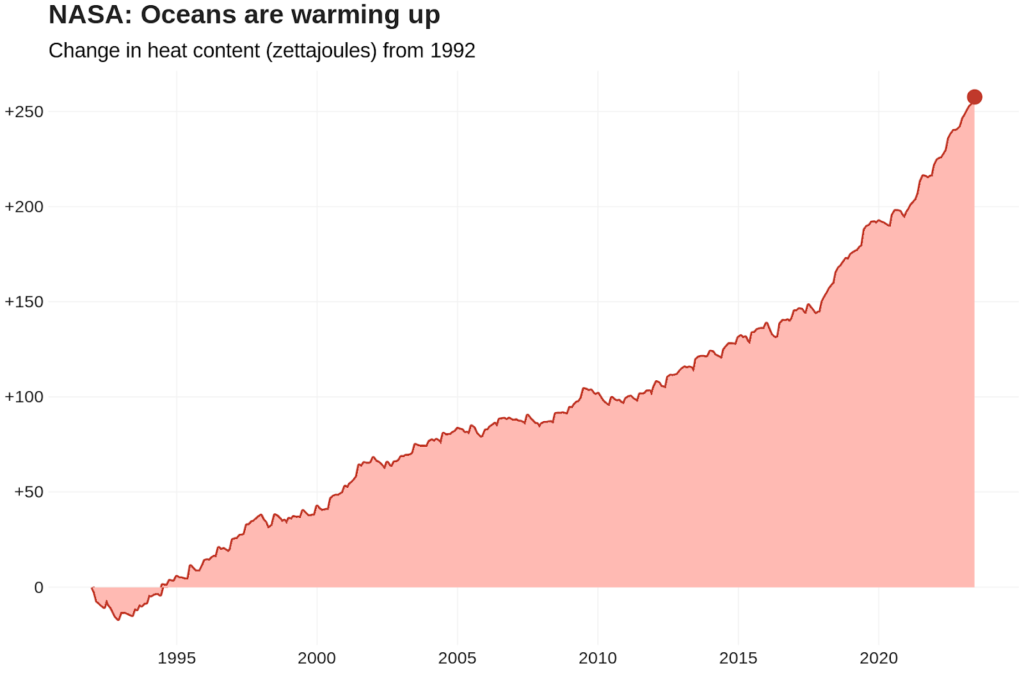
The changes of the overall temperature of the ocean has many effects on the plants and animals that depend on the aquatic ecosystem – endangering the habitat and ecosystems of ocean life as a whole (EPA).
This issue extends further than the water, and makes landfall in our communities all over the world.
The warming climate insinuates many climate issues that fuel and encourage the presence of natural disasters such as hurricanes through the presence of warmer ocean temperatures, more humid atmospheric air and higher wind speeds – the perfect trio (Planet). It is reported that before Hurricane Helene, the Gulf of Mexico’s water temperature was 3.6 times higher than average, causing a boost in wind speeds and an increased amount of rainfall (AP News). This boost in wind speeds and rainfall in turn caused catastrophic damage to homes and towns alike. In addition, according to the National Oceanic and Atmospheric Administration, from 1980-2023 the average number of natural disasters is 8.5 events annually; from 2019-2023 the average number of natural disasters is 20.4 events annually (NOAA). Natural Disasters such as wildfires, severe storms, and winter storms continuously increase where the American Red Cross is responding today to twice as many disasters as 10 years ago (Am. Red Cross).
The risk of more severe tropical activity is one that has been monitored and predicted for a while. The NOAA predicted an “above-normal” hurricane season in the Atlantic back in May (NOAA), citing nearly record-breakingly high ocean temperatures as a major contributing factor. These temperatures are expected to rise consistently-long term due to the burning of fossil fuels, which are adding greenhouse gasses to the atmosphere and trapping heat near the Earth’s surface (NYT). Deeper warm water provides more energy to fuel hurricanes, causing them to increase in intensity as they move faster and farther than in previous years.
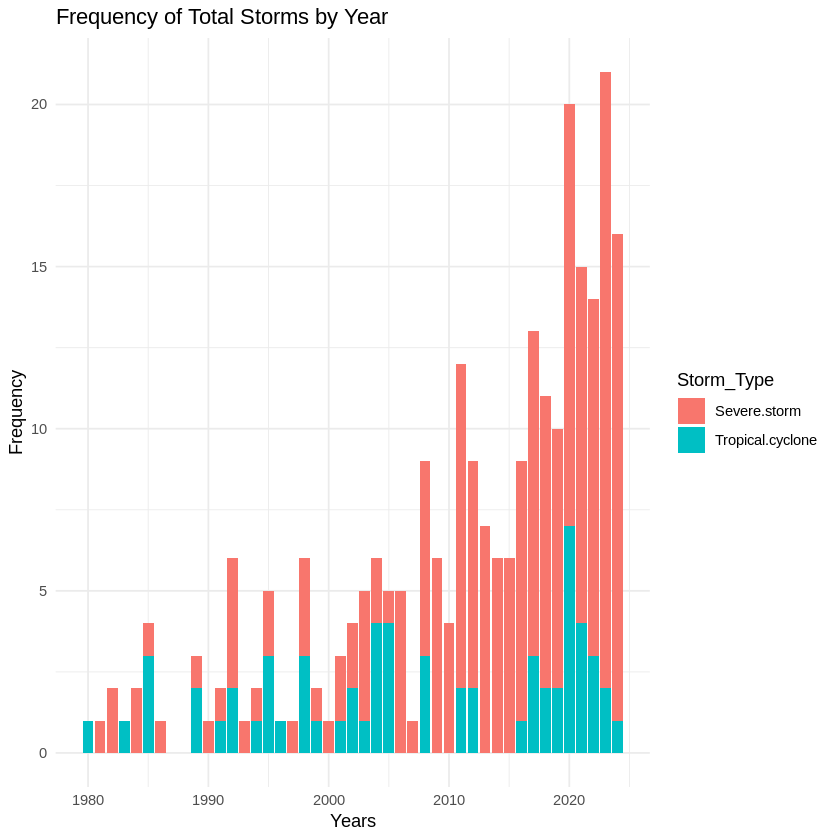
The frequency of hurricanes has not escalated as a result of the increasingly evident climate crisis; however, the intensity of these tropical cyclones has become catastrophic (NPR). Scientists report that the increasing atmospheric temperatures caused by climate change may actually be decreasing the total number of storms- but the storms that do form are likely to be more intense. Tom Knutson’s research finds that more storms will make landfall in the US as a Category 4 or 5 by 2030. Reiterating the fact that hurricanes while they may not be more frequent and becoming significantly more dangerous (The Atlantic).
Residents who live in these areas tell their own story on these most recent hurricanes:
The damage and impact of Hurricane Helene hit our area pretty hard. We’ve had our share of bad storms and hurricanes to pass through Augusta, but this experience in a first hand account was unimaginable”
@Minimarie Writes and Speaks
Potentially the most powerful hurricane in recorded human history on its way with airports, & civilian airspace alike closed for an entire coastline…However, this time watching first hand Floridians prepare for yet another storm of the century, seeing gas stations close with my own eyes, flights fill up with frightening speed as did all of the interstates & rental cars evaporation have forever altered my perspective”
@Richard Rowland
The gas shortages are so wild… there was an issue at the Tampa port and I guess it backed everything up. There are so many people losing gas on the side of the road or losing gas waiting in line to get gas. People can’t run their generators without gas… it’s so crazy. Fights are breaking out at the gas stations, you’ve got people waiting in their cars for hours and hours and hours… it just feels so apocalyptic.”
@Jessheavenlyhomeschool
We are okay… but we are honestly traumatized… go back to my last video where we heard something fall onto the house. Literally the scariest moment of my life. We had no idea what it was or what was going on until the next morning.”
@Jessheavenlyhomeschool
How are hurricanes becoming more dangerous and destructive?
There are many different ways that one can characterize a natural disaster- the initial category derived from the Saffir-Simpson Hurricane Wind Scale, based on the maximum wind speed that the hurricane can sustain but does not take into consideration other potential deadly hazards like rainfall, flooding and storm surges (NHC), and additionally the cost of the disaster. The National Oceanic and Atmospheric Administration is responsible for calculating the costs of these natural disasters through the destruction of homes and buildings, damage to vehicles, damage to public infrastructure, damage to agriculture, and costs involved with people losing their homes and jobs. While all storms and natural disasters cause damage and have significant impacts on communities and citizens, tropical cyclones are proven to be the costliest, both in finances and in lives lost (USA Facts). In 2024 alone, there have been 20 natural disaster events with costs of over $1 Billion for each event excluding the most recent Hurricanes, Helene and Milton (NOAA).
How to Prepare
Hurricanes may not be happening more often, but their damage is at an all-time high. Residents should be aware of the effect of climate change on natural disasters and further efforts to counteract and prepare for the overwhelming effects of these current natural disasters on their communities. “Taking a proactive approach to our increasingly challenging climate landscape today can make a difference in how people can recover tomorrow,” says FEMA Deputy Administrator Erik A. Hooks, stressing the importance of preventative measures such as fortifying homes, checking up on insurance and documenting possessions such as photos and serial numbers that could be needed to file a claim.
Following Hurricane Debby, a category 1 storm that hit the Southeastern United States in August of this year, 77% of Florida homeowners with Citizens Property Insurance were denied claims despite the company being state-backed (News 4). The storm was responsible for an estimated $1.4 billion in damages despite comparatively low wind speeds. $440 million of that damage was attributed to inland flooding, which Citizens does not cover. A spokesman of the company told News 4, a local Jacksonville news outlet, that “Citizens, like most other insurers, doesn’t cover flood.”
Bridging Insurance Gaps and Financial Preparedness
Because ordinary insurance policies like Citizens usually exclude flood damage, many homeowners are subject to financial hardship during hurricanes. Separate flood insurance policies can provide crucial measures for protection as storms cause increased inland flooding, flash floods and seasonal storm surges. According to FEMA, “floods—including inland flooding, flash floods, and flooding from seasonal storms—occur in every region of the United States… in fact, 90 percent of all natural disasters in the U.S. involve some type of flooding,” illustrating the increasingly relevant need for comprehensive coverage. To make it easier to recover from possible losses, FEMA advises creating a financial safety net in addition to insurance, such as setting aside emergency funds for unforeseen storm-related costs.
Developing Resilience
While preparation is imperative, long-term measures to combat climate change and lessen the underlying causes of these catastrophes are just as important. Reducing climate hazards can lessen the frequency and intensity of damage caused by weather. To assist in reducing greenhouse gas emissions, it is crucial to reduce dependency on fossil fuels, support renewable energy sources, and preserve buffering natural environments such as mangroves and wetlands.
Proactive remedies are already being implemented in communities around the United States. For instance, in order to assist flood damage, new building standards in Miami mandate higher elevations for new development. In a similar vein, North Carolina coastal municipalities are using natural materials to create “living shorelines” that better shield their properties from storm surges (NCSU). FEMA encourages people to support local efforts to create long-term resilience while it works to modify its own risk assessment procedures to better incorporate the reality of climate change.
Community Awareness and Action
Individuals and families must keep informed when adjusting to climate change. The American Red Cross and the National Oceanic and Atmospheric Administration (NOAA) are two trustworthy organizations that provide helpful preparedness guidelines specific to severe weather occurrences. Self-education and involvement in community preparedness activities, such as emergency drills and resilience training, can offer readiness and peace of mind.
Communities are better equipped to handle the problems posed by climate change when significant actions are taken, whether through community activism, home preparations, or lobbying for legislative reforms that promote renewable energy and environmental preservation. As we enter a period of more intense storms, it is more crucial than ever to work together to protect our homes, communities, and future.
]]>